

Case studies title in two lines used as a placeholder text

CHAPTERS
Why launches drift
tandard paragraph text. Programs rarely fail all at once; they drift. A process window that looked fine at first article slowly moves as materials, tooling, and conditions shift. This section establishes the problem the article addresses and gives the reader a reason to keep going.
A second paragraph continues the thought, showing how multiple paragraphs sit together with comfortable spacing and a readable measure. The column is capped at roughly 70 characters so lines stay easy to scan.
A pull-quote / emphasis block — useful for a key line the reader should remember. Optional component.
Author: Full Name
The scientific molding approach
Intro paragraph for the second chapter. Below is a subheader (H3) followed by more body copy, to show the heading hierarchy nesting under an H2.
Data over guesswork
H3 subheader with a supporting paragraph. Scientific molding replaces trial-and-error with measured process inputs, so decisions are grounded in data rather than operator intuition.
Where it matters most
Another subheader and paragraph. Tight tolerances, engineering-grade materials, and complex geometries are where disciplined process development pays off most.
Building a validated process
This chapter demonstrates a numbered list — for sequential steps or an ordered process:
- Define the critical-to-quality dimensions and the acceptable process window.
- Run a designed experiment (DOE) to map how inputs affect outputs.
- Lock the process at the most robust set point, away from the edges of failure.
- Document the window, controls, and rationale for change control and audits.
What it means for OEM teams
This chapter demonstrates a bulleted list — for non-sequential points:
- Define the critical-to-quality dimensions and the acceptable process window.
- Run a designed experiment (DOE) to map how inputs affect outputs.
- Lock the process at the most robust set point, away from the edges of failure.
- Document the window, controls, and rationale for change control and audits.
A note on transfer programs
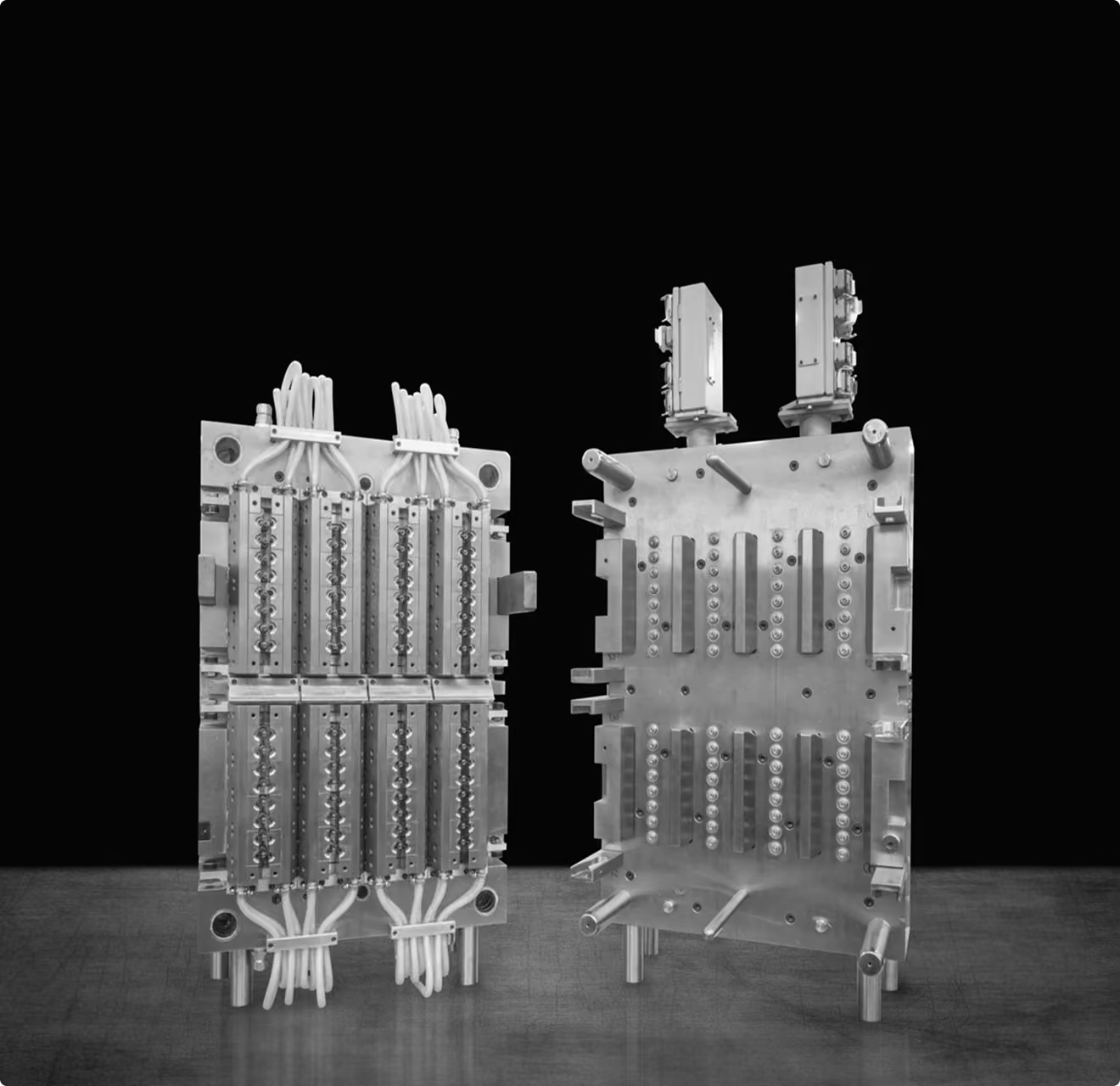
Final chapter, and a place to demonstrate an inline image with a description/caption below it.
The scientific molding approach
Intro paragraph for the second chapter. Below is a subheader (H3) followed by more body copy, to show the heading hierarchy nesting under an H2.
Join Our Newsletter to Stay in Touch

Your information is secure and will never be shared. Privacy Policy